Showing posts with label The Elegance of the Hedgehog. Show all posts

Thursday, January 8, 2015

Winter XXV. The virtue of being self-centered + Beauty


Intro & Preface & Contents

Previous: Winter XXIV. Time and money


The dark days are drawing to an end. Soon it will be spring once more; I shall go out into the fields, and shake away these thoughts of discouragement and fear which have lately too much haunted my fireside. For me, it is a virtue to be self-centred; I am much better employed, from every point of view, when I live solely for my own satisfaction, than when I begin to worry about the world. The world frightens me, and a frightened man is no good for anything. I know only one way in which I could have played a meritorious part as an active citizen -- by becoming a schoolmaster in some little country town, and teaching half a dozen teachable boys to love study for its own sake. That I could have done, I daresay, Yet, no; for I must have had as a young man the same mind that I have in age, devoid of idle ambitious, undisturbed by unattainable ideals. Living as I do now, I deserve better of my country than at any time in my working life; better, I suspect, than most of those who are praised for busy patriotism.

Not that I regard my life as an example for any one else; all I can say is, that it is good for me, and in so far an advantage to the world. To live in quiet content is surely a piece of good citizenship. If you can do more, do it, and God-speed! I know myself for an exception. And I ever find it a good antidote to gloomy thoughts to bring before my imagination the lives of men, utterly unlike me in their minds and circumstances, who give themselves with glad and hopeful energy to the plain duties that lie before them. However one’s heart may fail in thinking of the folly and baseness which make so great a part of to-day’s world, remember how many bright souls are living courageously, seeing the good wherever it may be discovered, undismayed by portents, doing what they have to do with all their strength. In every land there are such, no few of them, a great brotherhood, without distinction of race or faith; for they, indeed, constitute the race of man, rightly designated, and their faith is one, the cult of reason and of justice. Whether the future is to them or to the talking anthropoid, no one can say. But they live and labour, guarding the fire of sacred hope....


Alpha.

This section reminds me of Settembrini in The Magic Mountain, hard at work on his Encyclopedia of Suffering. The key phrase here may be “teachable boys.” The use of “teachable” I approve. The notion that educating everyone, in this sense, is absurd. But, again, limiting this education to boys is missing a great opportunity. It is easy enough to write this off as being a sign of the times, but he has, presumably read Austen and Sand and other women. He (Ryecroft or Gissing) really should know better than this.


Beauty.


...beauty consists of its own passing, just as we reach for it. It’s the ephemeral configuration of things in the moment, when you can see both their beauty and their death.


Oh my gosh, I thought, does this mean that this is how we must live our lives? Constantly poised between beauty and death, between movement and its disappearance?


Maybe that’s what being alive is all about: so we can track down those moments that are dying.


-Paloma in The Elegance of the Hedgehog


There’s a passage in one of Armistead Maupin’s Tales of the City novels where we learn that prostitutes dislike cut flowers for the grim symbolism -- beauty cut down in its prime and destined to quickly shrivel and die. True or not, this is a compelling aspect of natural beauty in general and feminine beauty in particular. How much does the ephemeral nature of beauty contribute to our appreciation? Would a cherry tree in bloom, or a Japanese maple in its full autumn finery, be so compelling if it’s time was not so limited? Is the aesthetic feeling of the person from the stable tropics different than that of the dweller of temperate lands with distinct seasons?


Just as “happily ever after” makes for a poor story, is lovely forever the end of a certain appreciation of beauty?


And while we have both “happily ever after” and The Elegance of the Hedgehog in mind, I need to SPOILER the paragraphs below for people who have not finished Hedgehog and think they might read it at some time in the future. You are warned!


Hedgehog, in my view, is a lovely novel about beauty, perception, and death. I have just reread the fateful scene, but not yet it’s denouement. This reading I have particularly noticed how well the author has prepared us for this -- though always with a strong dash of misdirection. Renee has mourned the anticipated departure of Manuela. Paloma has envisioned how her death will shake up her family and neighbors. We have been told, by Paloma, that the most important thing is what you are doing when you die. We have been told by Renee, just a few pages ago, “... I am weary. Something must come to end; something must begin.”


By coincidence (?) I am also re-watching -- yet again -- the final episodes of the TV show Dead Like Me. The premise of Dead Like Me is that certain people, after they die, get to stay on earth (with a different physical appearance) as Grim Reapers -- they take the souls of people just before they die. The Reapers are supposed to keep to themselves and not get involved with the living, and especially not with the dying, but on occasion they do favors for the dying or make their ends a little more pleasant.

Novelists are, if you think about it, often Grim Reapers of the characters they’ve created. Is it kind or cruel to kill off your character just as she can see her “happily ever after?” Ignoring for the moment that, besides being boring, “happily ever after” is most often an illusion, I think it’s generous for the author (Creator, if you wish) to let the character (like Moses) see the destination. In this case, the character has mostly arrived at that destination. I would give Barbery credit for being a kind and generous Reaper. In that character's own words, at the time of her death, I had met another, and was prepared to love.” I seem to recall Ryecroft saying, early on (of course I can't find it now) that happiness is as satisfying for a short period of time as for a long period of time. I can see the truth in this while still thinking that more happiness might be at least a little better. But in literary terms, this claim is definitely true.



Sunday, December 21, 2014

Winter VI. Tea + Consonance and dissonance, again


Intro & Preface & Contents

Previous: Winter V. Self regained


One of the shining moments of my day is that when, having returned a little weary from an afternoon walk, I exchange boots for slippers, out-of-doors coat for easy, familiar, shabby jacket, and, in my deep, soft-elbowed chair, await the tea-tray. Perhaps it is while drinking tea that I most of all enjoy the sense of leisure. In days gone by, I could but gulp down the refreshment hurried, often harassed, by the thought of the work I had before me; often I was quite insensible of the aroma, the flavour, of what I drank. Now, how delicious is the soft yet penetrating odour which floats into my study, with the appearance of the teapot! What solace in the first cup, what deliberate sipping of that which follows! What a glow does it bring after a walk in chilly rain! The while, I look around at my books and pictures, tasting the happiness of their tranquil possession. I cast an eye towards my pipe; perhaps I prepare it, with seeming thoughtfulness, for the reception of tobacco...

In nothing is the English genius for domesticity more notably declared than in the institution of this festival -- almost one may call it so -- of afternoon tea. Beneath simple roofs, the hour of tea has something in it of sacred; for it marks the end of domestic work and worry, and beginning of restful, sociable evening. The mere chink of cups and saucers tunes the mind to happy repose... it is -- again in the true sense -- the homeliest meal of the day. Is it believable that the Chinese, in who knows how many centuries, have derived from tea a millionth part of the pleasure or the good which it has brought to England in the past one hundred years?


Alpha.

That last sentence got me thinking. It seems that “afternoon tea” in the sense Gissing uses it, only dates from the 1840s, less than a century before. And tea was introduced to the English court in the 1660s, about 240 years before. It’s hard to imagine the English without tea. His claim that they have derived more enjoyment from tea than have the Chinese, or Japanese, suggests a veritable festival of hyperbole. I am also reminded of a favorite passage from Proust, “What fun it would be to have a little woman like that in a place where one could always be certain of finding, what one never can be certain of finding, a really good cup of tea”. This is one of the sections of this book I would want to read more frequently, maybe even daily, to remind me to pay attention -- to celebrate -- the moment and my meals. The traditional Chinese and Japanese tea ceremony has this some function, of focusing the mind on the moment and heightening the senses. The truth is that most days I just have iced tea, and don’t pay much attention even to that.


Consonance and dissonance, again.


...What congruence links a Claesz, a Raphael, a Rubens and a Hopper? We need not search, our eye locates the form that will elicit a feeling of consonance, the one particular thing in which everyone can find the very essence of beauty, without variations or reservations, context or effort. In the still life with a lemon, for example, this essence cannot merely be reduced to the mastery of execution; it clearly does inspire a feeling of consonance, a feeling that this is exactly the way it ought to have been arranged. This in turn allows us to feel the power of objects and of the way they interact, to hold in our gaze the way they work together and the magnetic fields that attract and repel them, the ineffable ties that bind them and engender a force, a secret and inexplicable wave born of both tension and the balance of the configuration -- this is what inspires the feeling of consonance. The disposition of the objects and the dishes achieves the universal in the singular: the timeless nature of the consonant form.


-Renee Michel in Hedgehog


Previously, when reading this passage, I focused on the mysterious consonance of art and objects Muriel Barbery is drawing our attention to here. Combining our instinctual appreciation of art with what we can guess of the phenomenological and Quantum reality that underlies what we apprehend (we can leave String theory to the apprehension of music, though it also applies here) leaves us to wonder at the inner workings of beauty and to marvel how much more complex and mysterious the everyday world really is. But this time, reading Hedgehog, I was struck by the first meeting of all the central characters: Renee and Manuela, Paloma, and finally Kakuro. This meeting doesn’t take place until page 267 (with only 58 pages left in the book). By now we know all these characters and how well they fit together -- how well they belong together. In a word, how consonant their personalities are.


What Barbery has been saying about art applies even more to people. Kakuro recognizes in both Renee and Paloma congruent spirits. The three of them instantly fit together because of all they share, including the commonality of how they differ from all the others. We’ve all had this experience many times, of suddenly, after not having anything at all in common with those around us, coming into contact -- communion -- with someone we can actually talk to with some hope of being understood.


How this works is as much a mystery as a Dutch still life. Suddenly, after becoming used to avoiding people or limiting contact or straining to find some common ground, we run into a person we can’t stop talking to, and look forward to engaging again. It can be a shock to the system.


And it isn’t always quite that simple. The woman who most shaped my character, who I best meshed with, was not an immediate fit. She was someone I had to grow into -- too slowly, as it turned out. Yet even then, there was a shared intelligence and way of seeing the world that first drew us together, despite the discrepancies in our personalities. Interpersonal confrontations like this mirror the “shock of the new” in art. And this is also where dissonance comes in, just as I argued that it does in art (Spring XXI. Consonance) in both painting and especially in music. Complete consonance would be bland and insipid when it comes to new people. It’s the level of dissonance that spikes our interest and challenges us to grow.


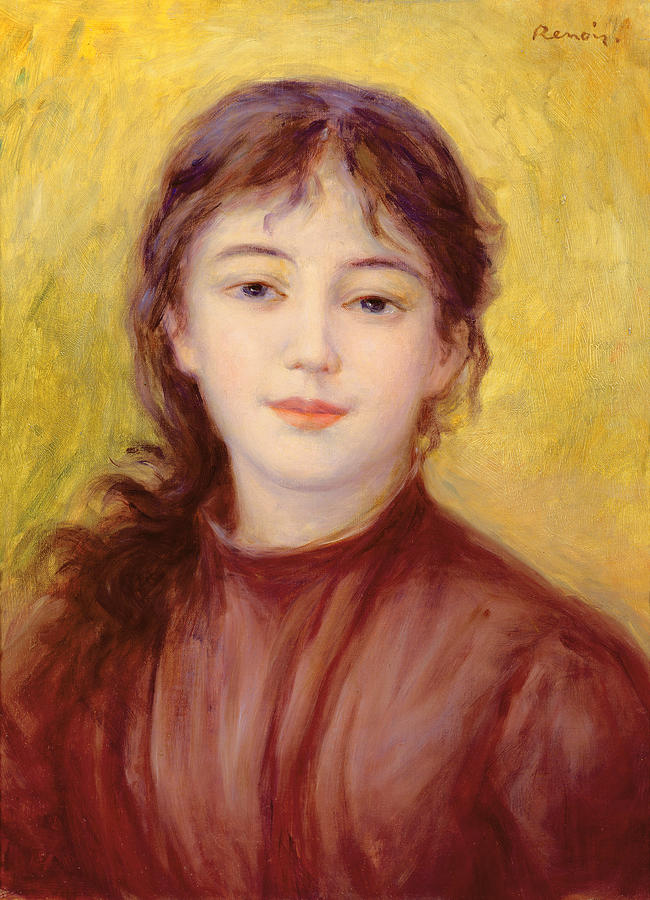
So, alluding once again to synesthesia and the ability of some people to “see” things differently, could there be people who perceive personalities like my friend as a new type of art. Rather than seeing hair and features and clothes and jewelry (a Renoir portrait, let’s say,


...do they instead see a Van Gogh? 


Wednesday, November 12, 2014

Interlude XIX. Nietzsche - part 8

Socrates the theoretical man


Intro & Preface & Contents

Previous: Interlude XVIII. Nietzsche - part 7


From The Birth of Tragedy by Friedrich Nietzsche...


Sec 15 - The theoretical man

... it is enough to recognize in him [Socrates] a type of existence unheard of before him: the type of the theoretical man whose significance and aim it is our next task to try to understand. Like the artist, the theoretical man finds an infinite delight in whatever exists, and this satisfaction protects him against the practical ethics of pessimism... the theoretical man... finds the highest object of his pleasure in the process of an ever happy uncovering that succeeds through his own efforts.


...there is... a profound illusion that first saw the light of the world in the person of Socrates: the unshakable faith that thought, using the thread of logic, can penetrate the deepest abysses of being, and that thought is capable not only of knowing being but even of correcting it. This sublime metaphysical illusion accompanies science as an instinct and leads science again and again to its limits at which it must turn into art -- which is really the aim of this mechanism.


[The mission of science is] ... to make existence appear comprehensible and thus justified; and if reasons do not suffice, myth has to come to their aid in the end -- myth which I have just called the necessary consequence, indeed the purpose of science...


...Socrates is the prototype of the theoretical optimist who, with his faith that the nature of things can be fathomed, ascribes to knowledge and insight the power of a panacea, while understanding error as the evil par excellence...


But science, spurred by its powerful illusion, speeds irresistibly toward its limits where its optimism, concealed in the essence of logic, suffers shipwreck... When they see to their horror how logic coils up at these boundaries and finally bites its own tail -- suddenly the new form of insight breaks through, tragic insight which, merely to be endured, needs art as a protection and remedy...

"Bites its own tail" sounds like Nietzsche's mature voice sneaking through in this his first book. In general, The Birth of Tragedy does not read like the confident (all too confident, at times) Nietzsche of his later books.

While I was thinking I only needed to read the first 15 sections of The Birth of Tragedy, since both Nietzsche and Kaufmann (the translator) agree that's where the book should end, I have now decided I need to read the rest since it has to do with contemporary (for Nietzsche) German art and music -- and also because Thomas Mann may have held a different view. To contradict my previous notion of studying history backward (because it is so hard to remember that things or concepts we take for granted didn’t necessarily exist in the past. “Nationalism” as it is currently understood, was invented by Hegel around 1800, for example. So that studying the past becomes a process of subtraction), I have to admit that reading Nietzsche requires a familiarity with Goethe, Schiller, Lessing, and especially Schopenhauer. Nietzsche includes a two page quote from Welt als Wille und Vorstellung in section 16 that is pretty great... though Schopenhauer usually tends to make me nod off. This passage, in particular, goes well with my quote from Dr. Kaku (Interlude XIV. ) about “cosmic music”, ...“We might, therefore, just as well call the world embodied music as embodied will; and this is the reason why music makes every painting, and indeed every scene of real life and of the world, at once appear with higher significance, certainly all the more, in proportion as its melody is analogous to the inner spirit of the given phenomenon...


Sec 16 - Schopenhauer

[Quoted from Schopenhauer,] ...All possible efforts, excitements, and manifestations of will, all that goes on in the heart of man and that reason includes in the wide, negative concept of feeling, may be expressed by the infinite number of possible melodies, but always in the universal, in the mere form, without the material, always to the thing-in-itself, not the phenomenon, the inmost soul, as it were, of the phenomenon without the body. This deep relation which music has to the true nature of all things also explains the fact that suitable music played to any scene, action, event, or surrounding seems to disclose to us its most secret meaning, and appears as the most accurate and distinct commentary upon it... music is distinguished from all the other arts by the fact that it is not a copy of the phenomenon... but an immediate copy of the will itself, and therefore complements everything physical in the world and every phenomenon by representing what is metaphysical, the thing in itself... [to repeat] We might, therefore, just as well call the world embodied music as embodied will; and this is the reason why music makes every painting, and indeed every scene of real life and of the world, at once appear with higher significance, certainly all the more, in proportion as its melody is analogous to the inner spirit of the given phenomenon... For melodies are to a certain extent, like general concepts, an abstraction from the actual. This actual world, then, the world of particular things, affords the object of perception, the special and individual, the particular case, both to the universality of the concepts and to the universality of the melodies. But these two universalities are in a certain respect opposed to each other; for the concepts contain particulars only as the first forms abstracted from perception, as it were, the separated shell of things, thus they are, strictly speaking , abstracta: music, on the other hand, gives the inmost kernel which precedes all forms, or the heart of things... ...when the composer has been able to express in the universal language of music the stirrings of will which constitute the heart of an event, then the melody of the song... is expressive, But the analogy discovered by the composer between the two must have proceeded from the direct knowledge of the nature of the world unknown to his reason, and must not be an imitation produced with conscious intention by means of concepts, otherwise the music does not express the inner nature, the will itself, but merely gives an inadequate imitation of its phenomenon...

(Schopenhauer, Welt als Wille und Verstellung) Schopenhauer seems not to have cared much for paragraphs.


[Back to Nietzsche] ...it is only through the spirit of music that we can understand the joy involved in the annihilation of the individual. For it is only in particular examples of such annihilation that we see clearly the eternal phenomenon of Dionysian art, which gives expression to the will in its omnipotence... the eternal life beyond phenomena, and despite annihilation. The metaphysical joy in the tragic is a translation of the instinctive unconscious Dionysian wisdom into the language of images: the hero, the highest manifestation of the will, is negated for our pleasure, because he is only phenomenon, and because the eternal life of the will is not affected by his annihilation... Plastic art has an altogether different aim: here Apollo overcomes the suffering of the individual by the radiant glorification of the eternity of the phenomenon: here beauty triumphs over the suffering inherent in life; pain is obliterated by lies from the features of nature. In Dionysian art and its tragic symbolism the same nature cries to us with its true, undissembled voice: 'Be as I am! Amid the ceaseless flux of phenomena I am the eternally creative primordial mother, eternally impelling to existence, eternally finding satisfaction in this change of phenomena!'


This works well with the significance Muriel Barbery gave to music in The Elegance of the Hedgehog. On the other hand, music, as a path to the Dionysian, would seem to subvert Foucault's insistence that madness is the only access we have to the world of unreason.

From The Elegance of the Hedgehog, this is Paloma talking about a choir performance at her school:


...Everyday life vanishes into song, you are suddenly overcome with a feeling of brotherhood, of deep solidarity, even love, and it diffuses the ugliness of everyday life into a spirit of perfect communion. Even the singer's faces are transformed: it's no longer Achille Grand-Fernet that I'm looking at (he is a very fine tenor), or Deborah Lemeur or Segolene Rachet or Charles Saint-Sauveur. I see human beings, surrendering to music.

Every time, it's the same thing, I feel like crying, my throat goes all tight and I do the best I can to control myself but sometimes it gets close: I can hardly keep myself from sobbing. So when they sing a canon I look down at the ground because it's just too much emotion at once: it's too beautiful, and everyone singing together, this marvelous sharing. I'm no longer myself, I am just one part of a sublime whole, to which the others also belong, and I always wonder at such moments why this cannot be the rule of everyday life, instead of being an exceptional moment, during a choir...


Monday, August 18, 2014

Spring I. Exposition

Intro & Preface & Contents


For more than a week my pen has lain untouched I have written nothing for seven whole days, not even a letter. Except during one or two bouts of illness, such a thing never happened in my life before. In my life; the life, that is, which had to be supported by anxious toil; the life which was not lived for living’s sake, as all life should be, but under the goad of fear. The earning of money should be a means to an end; for more than thirty years -- I began to support myself at sixteen -- I had to regard it as the end itself.


... How I dreaded the white page I had to foul with ink! Above all, on days such as this, when the blue eyes of Spring laughed from between rosy clouds, when the sunlight shimmered upon my table and made me long, long all but to madness, for the scent of the flowering earth, for the green of hillside larches, for the singing of the skylark above the downs. There was a time -- it seems further away than childhood -- when I took up my pen with eagerness; if my hand trembled it was with hope. But a hope that fooled me, for never a page of my writing deserved to live. I can say that now without bitterness. It was youthful error, and only the force of circumstances prolonged it. The world has done me no injustice; thank Heaven I have grown wise enough not to rail at it for this! And why should any man who writes, even if he writes things immortal, nurse anger at the world’s neglect? Who asked him to publish? Who promised him a hearing? Who has broken faith with him? If my shoemaker turn me out an excellent pair of boots, and I, in some mood of cantankerous unreason, throw them back upon his hands, the man has just cause for complaint. But your poem, your novel, who bargained with you for it? ... If you have written a great book, the world to come will know of it. But you don’t care for posthumous glory. You want to enjoy fame in a comfortable armchair...


Alpha.

In my case it was not a bequest but Social Security and savings, some, it's true, inherited from my parents, that has placed me in my secure position. I own my apartment outright and -- between Social Security and the fixed income from gift annuities to some of my favorite charities -- I have a bit more in income than I spend in a year. I don't have enough to buy a cottage in the country, like Ryecroft, but then I shouldn't want to anyway. I am content to live in the city and enjoy city life. For one thing this saves me from needing to own a car.


Since my income was almost always irregular and I frequently needed to live on savings between jobs, I had always lived on a tight budget. You get so you don't even think about making unnecessary purchases or taking vacations. Now, I find it a strange pleasure to consider what I might do with the somewhat more than I need that I have. I will talk about one of the bigger items next time (I do sometimes look ahead in the book), but I've only made a few changes to my usual routine.


First, I contracted with a cleaning service to have people come in every two months and give the place a good cleaning. I've always done my own cleaning -- and I still do my own laundry and cooking -- but having someone come in regularly forces me to keep the place tidy. Left to my own devices I might let things slide for months at a time. Second, I obtained a cellular phone plan that also offers WiFi-hotspot service so I can use my laptop nearly anywhere. Finally, I now have wicked fast Internet service at home. Two of these items would be a complete mystery to Ryecroft, and the third would be almost as puzzling -- to be dependent on a servant in the 21st century just seems to be more bother than it's worth.


I expect there will be regular, if relatively short, vacations in my future but I'm still taking things slowly.


Beta. The Matrix and Lucy

Making a film about Epistemology or Metaphysics is, of course, a ridiculous idea since no sane American concerns himself with such things. And yet if you incorporate concepts derived from the study of such arcane fields into an action film, and throw in enough gratuitous violence, you can have a hit on your hands. The Matrix did very well playing with the idea that the world we experience may not be the real world. Without talking about māyā or broaching the finer points of Existential Phenomenology, The Matrix at least introduced this concept to a mass audience.


At this point I feel I need to quote extensively from one of my favorite novels, The Elegance of the Hedgehog by Muriel Barbery:


Which brings us to the second question: what do we know of the world? Idealists like Kant have an answer to this question. What do they answer? They answer: not a great deal. Transcendental idealism holds that we can know only that which appears to our consciousness, that semi-devine entity that rescues us from our animal self. What we know of the world is what our consciousness can say about it because of what it has perceived -- and nothing else. Let us take an example, at random: a sweet cat by the name of Leo [Madame Michel's cat]. Why? Because I find it easier with a cat. And let me ask you: how can you be certain that it really is a cat and, likewise, how can you even know what a cat is? A healthy reply would consist in emphasizing the fact that your perception of the animal, complemented by a few conceptual and linguistic mechanisms, has enabled you to constitute your knowledge. But the response of the transcendental idealist would be to illustrate how impossible it is to know whether what we perceive and conceive of as a cat -- if that which appears to our consciousness as a cat -- is actually true to what the cat is in its deepest being. It may well be that my cat -- at present I perceive him as an obese quadruped with quivering whiskers and I have filed him away in my mind in a drawer labeled 'cat' -- is in actual fact, and in his essence, a blob of green sticky stuff that does not meow. My senses, however, have been fashioned in such a way that this is not apparent to me, and the revolting blob of green sticky stuff, deceiving both my disgust and my earnest trust, is masquerading before my consciousness beneath the appearance of a silky and gluttonous house pet. So much for Kantian idealism. What we know of the world is only the idea that our consciousness forms of it. But there is an even more depressing theory than that one, a theory that offers a prospect even more terrifying than that of innocently caressing a lump of green drool or dropping our toast every morning into a pustular abyss we had mistaken for a toaster. There is the idealism of Edmund Husserl... According to Husserl's theory, all that exists is the perception of the cat. And the cat itself? Well, we can just do without it. Bye-bye kitty. Who needs a cat? What cat? Henceforth, philosophy will claim the right to wallow exclusively in the wickedness of pure mind. The world is an inaccessible reality and any effort to try to know it is futile. What do we know of the world? Nothing. As all knowledge is merely reflective consciousness exploring its own self, the world, therefore, can merrily go to the devil. This is phenomenology: the 'science of that which appears to our consciousness.' How does a phenomenologist spend his day? He gets up, fully conscious as he takes his shower that he is merely soaping a body whose existence has no foundation, then he wolfs down a few slices of toast and jam that have been nihilized, slips on some clothes that are the equivalent of an empty set of parentheses, heads for his office, and then snatches up a cat. It matters little to our phenomenologist whether the cat exists or does not exist or even what a cat is in its very essence. The indemonstrable does not interest him. What cannot be denied, however, is that a cat appeared to his consciousness, and it is this act of appearing that is of concern to our good fellow.


Today I saw the movie Lucy, and while it is too soon to know how popular it will be (and I really need to see it a second time), it at least broaches the subject of the nature of reality in a Quantum universe, where matter is a state of energy, or possibly a harmonic state of energy if you are fond of String Theory. Luc Besson is a tricky director to watch as you have to turn off much of the reasoning portions of your brain (to get past the scientific nonsense, in The Fifth Element the notion that you can recreate, not just the physical person, but also the memories and even the bad, hair dye job of a person from her DNA. In Lucy the idea that using more of your brain allows you to violate the laws of physics). At the same time, you have to be alert for the interesting scientific/philosophical ideas being played with. The true premise of Lucy is: What would happen if you could interact with the universe as energy rather than as matter? -- ignoring the way it “appears” to us. The drug that allows her to use more of her brain, is just a clunky device for establishing a more profound connection with the "stuff" of the universe. Also a way of transcending classic mind-body dualism.


Maybe if you gave Scarlett Johansson enough guns she could even get Americans to learn algebra.


Another passage, again of Madam Michel, from Hedgehog is worth quoting here,

An interesting phenomenological experiment might consist in exploring the reasons why some phenomena fail to appear to the consciousness of some people but do appear to the consciousness of others. The fact that my image can at one and the same time make an impression in Neptun's skull [a dog] and bounce off that of Chabrot [the private physician to one of the wealthy residents] altogether is indeed a fascinating concept.


This is a very interesting line of thought. For example, by this same standard, we would have to grant to animals in general and even to plants a degree of consciousness since they are aware of and respond to things -- like the sun -- in their environment. (I recently saw an interesting time-lapse of plants showing how they move in anticipation of the sun's rising.) Some kind of phenomenological reality must be "present" for plants and "lower" life forms. Which, given our fairly tenuous position in a phenomenological world, makes them our equals.

Here is an interesting TED talk on reality and perception that arrives at the same conclusion Husserl did but starting with Darwin rather than with Kant.

Next: Spring II. Home